QuantWare Achieves 10,000-Qubit Milestone, Potentially Reshaping Quantum Computing

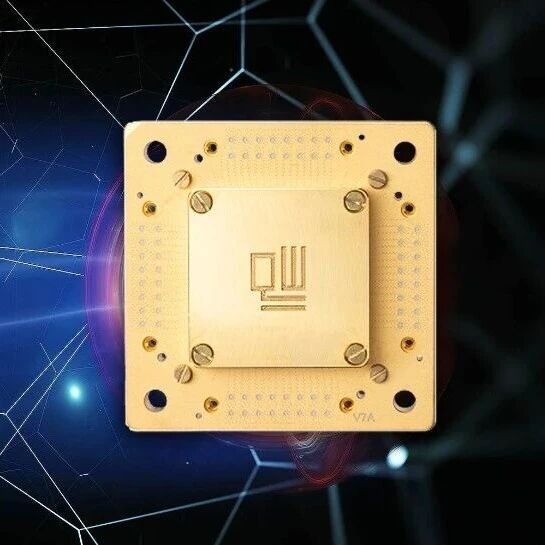
QuantWare has developed a 10,000-qubit processor, VIO-40K, which could mark a significant advancement in quantum computing, an area where major technology companies have faced scalability challenges for years. This development suggests a shift from the previous stagnation at the hundred-qubit level.
For nearly a decade, quantum computing has seen limited progress in qubit count. In 2019, Google announced its 53-qubit Sycamore processor, demonstrating "quantum supremacy." However, six years later, Google's qubit count has only reached 105. The company's 2021 goal of exceeding 1,000 qubits by 2023 was not met, with its flagship Heron chip reaching 133 qubits, leading to postponed expansion plans.
IBM's quantum roadmap also reflects this industry-wide slowdown. Between 2019 and 2023, both Google and IBM, along with other quantum firms like Rigetti, IonQ, and Quantinuum, remained largely within the hundred-qubit range. IBM's projections for 2024 to 2029 indicate that quantum processors will stay within the hundreds to low thousands of qubits.
Overcoming the Scalability Bottleneck
The primary obstacle to increasing qubit counts has been the engineering complexity associated with scaling. Each additional qubit introduces exponentially higher costs, increased control lines, wiring congestion, heightened susceptibility to quantum state collapse, and rapidly escalating error rates. At the hundred-qubit level, systems become highly sensitive, making further expansion difficult without compromising stability. This has led many to connect multiple smaller Quantum Processing Units (QPUs) via networks, a method that increases system complexity and cost without directly expanding the number of qubits on a single chip.
QuantWare's VIO-40K architecture aims to address this by directly increasing the qubit count from hundreds to 10,000. This development suggests that qubit expansion may no longer be the primary challenge in quantum computing. The company is currently accepting pre-orders for the VIO-40K, with shipments planned for 2028.
Architectural Innovations
The leap from hundreds to tens of thousands of qubits represents a fundamental shift in approach. While hundreds of qubits are suitable for proof-of-concept demonstrations, tens of thousands could enable practical applications. QuantWare's architecture utilizes 3D scaling and a chiplet design to manage I/O, wiring density, signal interference, and inter-module connections, which were previously major scalability hurdles.
The 3D scaling technique allows control lines to enter the quantum chip from multiple layers and directions, effectively expanding the wiring from a 2D plane into a 3D structure. This approach results in shorter connections between qubits, reduced noise, and more flexible expansion space.
The chiplet architecture, a concept also used in classical computing by companies like AMD and Intel, involves breaking down large QPUs into smaller, high-fidelity modules. These modules can then be combined into a complete system using high-quality interconnections. This modular design simplifies manufacturing, calibration, and repair, and allows for flexible expansion. QuantWare emphasizes "high-fidelity chip-to-chip connections," which means that connecting multiple QPUs can now facilitate expansion without degrading system quality.
The VIO-40K architecture supports 40,000 I/O control lines, a significant increase that addresses a critical bottleneck in quantum chip expansion. This infrastructure is essential for operating a 10,000-qubit system without immediately encountering noise issues.
QuantWare states that its 10,000-qubit chip is "smaller" than existing systems, indicating a breakthrough in engineering efficiency. This contrasts with previous attempts where qubit expansion led to larger, more complex, and more expensive systems. The VIO-40K aims to offer larger scale, smaller volume, higher yield, and lower noise, transforming quantum computing from an unscalable architecture into a viable hardware system.
Integration with Classical Computing
With the potential for scalable quantum computing, the focus shifts to integrating these systems with existing classical computing infrastructure. Quantum computers require classical computing for preprocessing, error correction, data throughput, unified compilation frameworks, and developer APIs.
NVIDIA is positioned to facilitate this integration. QuantWare's VIO-40K can interface with NVIDIA's NVQLink, enabling developers to use both quantum and classical computing resources simultaneously via CUDA-Q. NVQLink is NVIDIA's high-speed interconnect protocol for high-performance computing, while CUDA-Q is its software stack for quantum-classical hybrid computing. This combination suggests that NVIDIA is preparing the necessary interfaces for quantum computing.
The ability to scale qubits and integrate them with classical systems could open new avenues for computing power, particularly as Moore's Law slows and GPU growth approaches physical limits. The 10,000-qubit milestone represents a shift from quantum computing being "stuck" to becoming "scalable," laying a foundation for future quantum roadmaps and industry plans.