LeCun Departs Meta, Criticizes Silicon Valley's "Collective Delusion" on Large Language Models
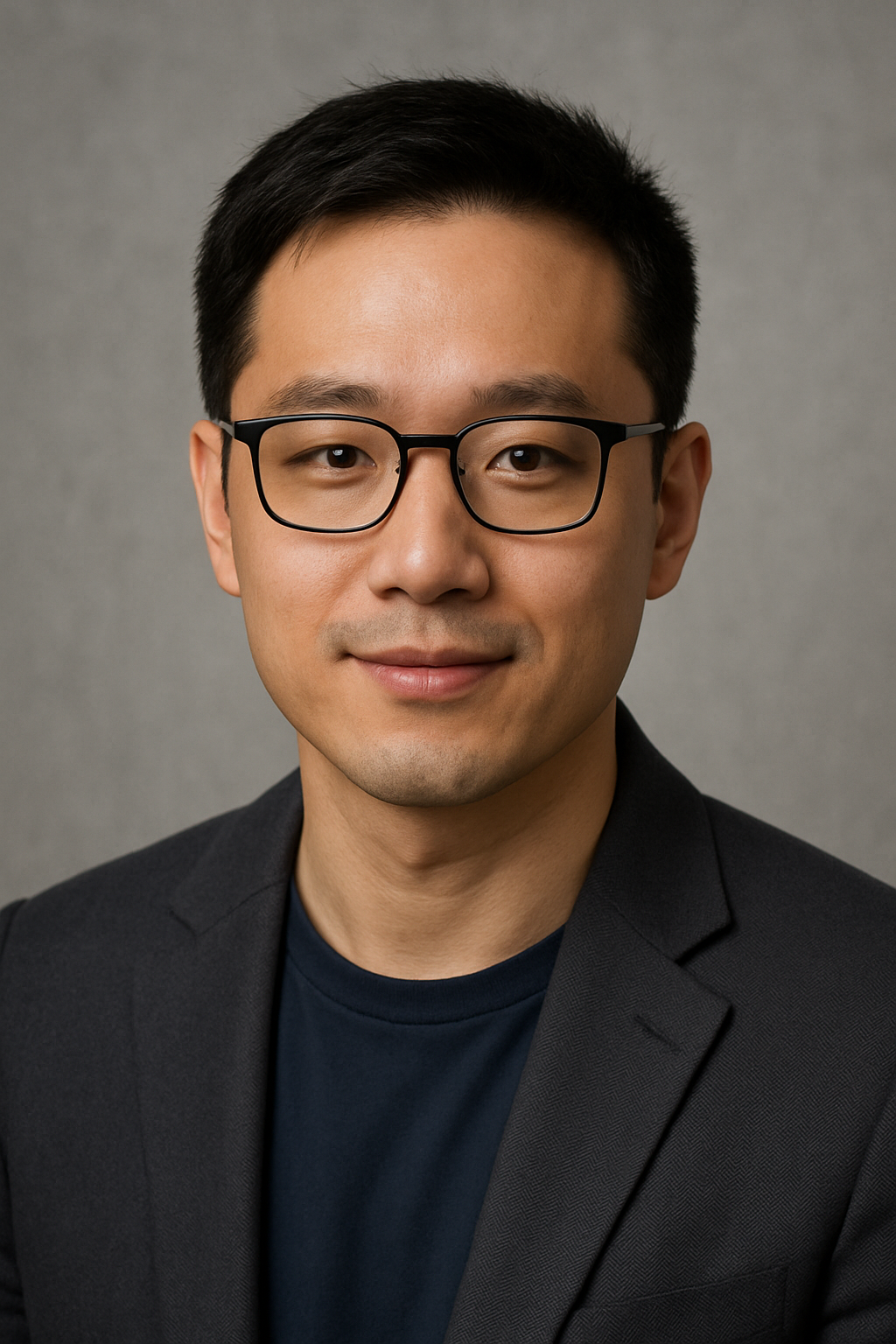

Yann LeCun, a Turing Award laureate, is set to leave Meta in three weeks, concluding a 12-year tenure. Ahead of his departure, LeCun has intensified his critique of Silicon Valley's focus on large language models (LLMs), describing the industry's approach as a "collective delusion" that will not lead to Artificial General Intelligence (AGI).
Large Models as a Dead End
LeCun asserts that the current path toward Artificial Superintelligence (ASI), which involves continuously training LLMs with more synthetic data, extensive post-training "disciplining" by human teams, and new reinforcement learning techniques, is fundamentally flawed. He stated in a recent interview that this approach is "complete nonsense" and "will never succeed."
The 65-year-old AI pioneer argues that Silicon Valley's obsession with scaling up LLMs is a dead end. He highlights that the most challenging problem in AI remains its inability to move beyond "cat and dog" level intelligence to human-level understanding. LeCun is now dedicating his academic focus to an alternative AI paradigm: the "world model."
He elaborated on the "world model" concept, which is being developed by his new startup, AMI (Advanced Machine Intelligence). This model aims to predict outcomes within an abstract representation space, rather than relying on pixel-level outputs. LeCun recently debated Google DeepMind's Adam Brown, reiterating his view that LLMs lack true intelligence, noting that even a cat or a child can comprehend the world with significantly less data. He characterized token prediction as a "bubble," emphasizing that the physical world represents true reality.
Founding AMI and Open Research
LeCun acknowledged that while he has been involved in startups before, AMI holds particular significance. He noted a new trend where investors are willing to fund such ventures, a shift from historical periods when large corporate laboratories like Bell, IBM, and Xerox PARC monopolized research funding.
He observed that while Meta's FAIR (Fundamental AI Research) promoted ecosystem development through open source, many laboratories, including OpenAI, Google, and Meta itself, have increasingly adopted closed-source approaches. LeCun believes this trend hinders breakthrough research, prompting him to establish AMI outside Meta to focus on "world models" and maintain a commitment to open research. He stressed that publishing papers is essential for genuine research, warning against "self-deception" in its absence.
LeCun's comments implicitly reference Meta's internal policies, where FAIR lab papers reportedly required approval from Meta's leadership before publication. He reiterated that enabling employees to publish is crucial for breakthroughs. AMI's objectives include not only research but also developing products related to world models and planning, aiming to become a key supplier of intelligent systems.
Critiquing LLM Limitations and Silicon Valley's Monoculture
LeCun explained that while current LLMs are adequate for language processing, they fall short in reliability, data efficiency, and multimodal processing. He has advocated for "world models" for nearly a decade as the correct approach. A "world model" predicts the consequences of actions, allowing systems to optimize and plan sequences of actions. This ability to predict and plan is, in LeCun's view, a core component of intelligence.
He noted that "world models" are designed to handle high-dimensional, continuous, and noisy modal data, which LLMs cannot effectively process. The effective method involves learning an abstract representation space, filtering out unpredictable details, and making predictions within that space. This is the principle behind JEPA (Joint Embedding Predictive Architecture).
LeCun has maintained for almost 20 years that unsupervised learning is the correct path for building intelligent systems. His research journey involved exploring autoencoders for representation learning in the early 2000s, realizing the need for an "information bottleneck" to limit information in representations. The advent of ResNet in 2015 resolved deep network training issues, prompting him to rethink human-level AI. He concluded that reinforcement learning is not scalable and sample-inefficient, leading him to focus on "world models." Initial attempts at pixel-level video prediction were unsuccessful; the breakthrough came with prediction at the representation level. JEPA's development addressed model collapse in early Siamese Networks, optimizing representation space through methods like Barlow Twins and VICReg, further advanced by Latent Euclidean JEPA.
LeCun also highlighted the data quality issues limiting LLMs. Training a functional LLM requires approximately 30 trillion tokens of text data, equivalent to about 15,000 hours of video. In contrast, a four-year-old child processes about 16,000 hours of visual information. He pointed out that while last year's V-JEPA 2 model was trained on video data equivalent to a century, the redundancy in video data is beneficial for self-supervised learning. The richness of real-world data structure, he argues, is why text-only training cannot achieve human-level AI.
Addressing the concept of an idealized "world model," LeCun clarified that it does not need to reproduce all details of the world. Instead, it acts as a simulator in an abstract representation space, focusing only on relevant aspects of reality. He believes synthetic data is useful but stresses that fundamental concepts are learned through experience, not innate. LLMs, he contends, do not truly understand these concepts but are merely fine-tuned to provide correct answers, which he likens to "rumination."
LeCun sharply criticized what he calls Silicon Valley's "monoculture" in AI. He identified a "herd mentality" driven by intense competition, where major tech companies like OpenAI, Google, Meta, and Anthropic are all pursuing similar LLM-centric strategies. This creates a dangerous "monoculture" and a sense of superiority. He warned that while companies feel compelled to push forward with LLMs to avoid being left behind, the greater risk is disruption by entirely different technologies. The JEPA concept and "world models" represent such an alternative, capable of handling data that LLMs struggle with.
He reiterated his strong disagreement with the notion that continuous LLM training, increased synthetic data, extensive post-training human intervention, and new reinforcement learning techniques will lead to ASI, calling it "complete nonsense." LeCun stated that escaping this culture is a key motivation for founding AMI, which is a global company with headquarters in Paris and offices in New York.
AGI as "Nonsense" and AI Timeline
When asked about the AGI timeline, LeCun dismissed the concept of "general intelligence" as meaningless, arguing that human intelligence is highly specialized. He believes that machines will eventually surpass humans in all domains, but this will be a gradual process. He optimistically predicted that significant progress in JEPA, world models, and planning over the next two years could lead to AI approaching human-level intelligence, or "dog-level intelligence," within 5-10 years. However, he acknowledged that historical AI development has faced unforeseen obstacles, which could extend this timeline to 20 years or more.
LeCun suggested that reaching "dog-level AI" is the most challenging step, as it provides most of the necessary elements. He noted that the difference between primates and humans, beyond brain size, lies in language processing, handled by Wernicke's and Broca's areas. LLMs excel at language encoding and decoding, potentially serving as these areas in AI. LeCun believes current research is focused on the prefrontal cortex, where the "world model" resides.
Meta Reorganization and Future Advice
LeCun confirmed that he will remain at Meta for three more weeks, with an official departure expected in early January. He clarified that Alexandr Wang is not replacing him but oversees all AI R&D and products at Meta, including FAIR, GenAI Lab, AI Infrastructure, and a department for productizing models.
He noted that FAIR, now led by Rob Fergus, is shifting towards "shorter-term projects" with less emphasis on paper publication, focusing instead on assisting GenAI Lab with LLM and frontier model research. This reorganization, heavily centered on LLMs, partly influenced LeCun's decision to start his own company. He also commented on other large model companies, including Ilya Sutskever's SSI, noting that even their investors are unclear about the company's direction.
In advice for young people, LeCun recommended focusing on knowledge with a "long shelf life" and skills that teach "how to learn," given the rapid pace of technological change. He humorously suggested that such knowledge often lies outside computer science. His specific recommendations include:
Mathematics: Deep study of calculus, linear algebra, and probability theory, especially mathematics applicable to the real world (common in engineering).
Traditional Engineering: Electrical and mechanical engineering provide useful tools like control theory, signal processing, and optimization for AI.
Physics: An excellent choice, as its core involves representing reality to build predictive models, which is central to intelligence.
Computer Science: Learn enough to be proficient in programming and computer usage, understanding underlying principles even if AI writes code in the future.
Philosophy: Important for broader understanding.
LeCun emphasized that these foundational skills will provide stability amidst rapid AI advancements, preventing individuals from being swayed by short-term trends.