AI Redefines Creative Boundaries in Film and Television Production
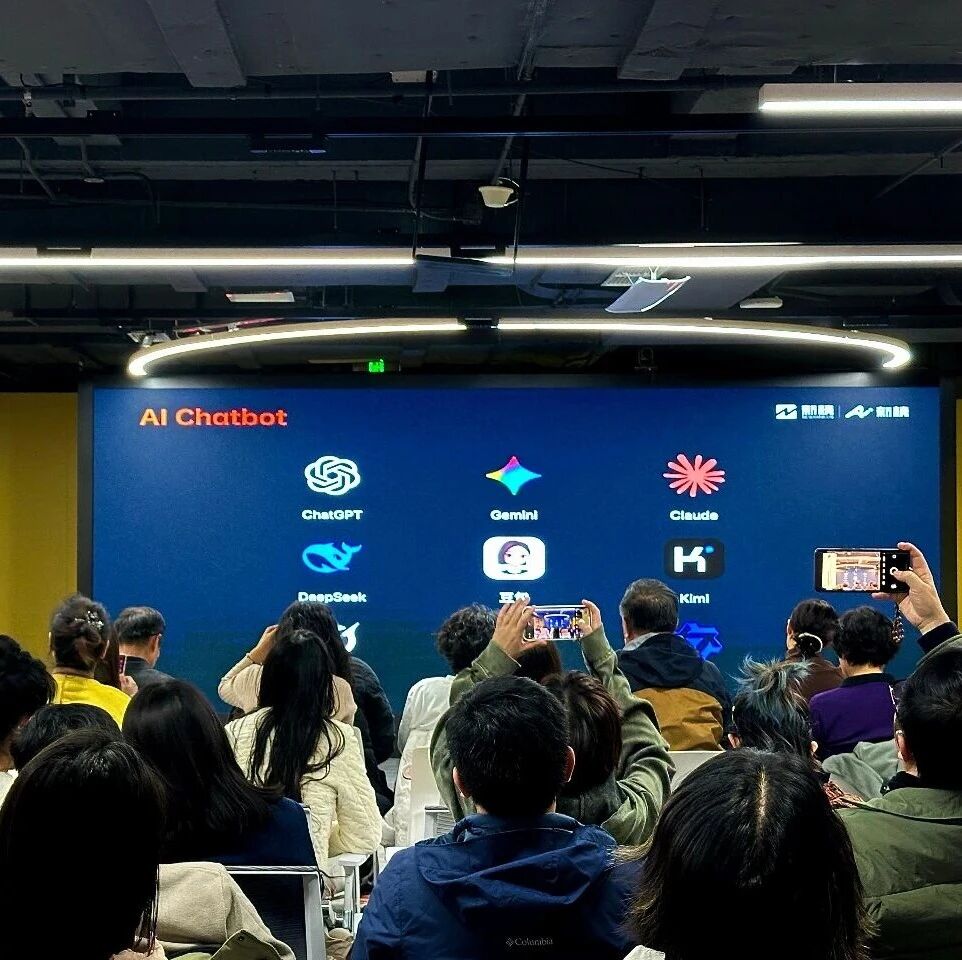
As AI systems move beyond text, their impact on creative industries, particularly film and television, is becoming increasingly profound. Recent discussions at the "Top Player Salon," an event hosted by AI New Ranking, highlighted how artificial intelligence is not only streamlining production workflows but also fundamentally altering the creative process and resetting industry benchmarks.
Highlights
The fourth session of the "Top Player Salon," held at FTC, Huangpu Bund, Shanghai, featured insights from several industry leaders. Speakers included Joey, General Director of the AI short drama "War of the Gods" and a super creator for Paiwo AI; Yao Shunyu, CTO of Chuangyi Technology and lead developer of the story content product One Story; Lu Hongyuan, founder of Face Mind, a PhD from Chinese University of Hong Kong/Imperial College London, and former Microsoft researcher; and Kino, a senior author for AI New Ranking. Their presentations focused on the transformative power of AI in content creation, from filmmaking to digital human development and audio production.
The Rationale
Joey, an AI creator who transitioned from traditional directing, emphasized that AI has largely completed the "infrastructure" for video production. This includes capabilities such as first and last frame control, lip-syncing, video extension, and background replacement. He noted that open-source models now offer precise control over dynamic elements, such as brand logos using depth map technology, and can stylize video content into various artistic forms.
From a structural standpoint, AI has also addressed long-standing industry challenges, such as image quality improvement and character consistency. Traditional sharpening methods often fall short, whereas AI's high-definition restoration can add rich details, making images appear more realistic. In practice, current models, such as Qwen, can simulate multi-angle character appearances with high consistency, eliminating the need for extensive manual adjustments.
Implementation
Joey detailed how AI is replacing complex traditional processes in film and television packaging. Tasks like font creation, motion tracking, and alignment, which previously required specialized software like After Effects, can now be directly generated by AI models. This allows for the rapid creation of stylistically consistent promotional videos.
In special effects production, AI's efficiency is particularly disruptive. Particle effects and complex environmental builds that once took weeks or months can now be completed in days or even hours using AI prompts and models. The AI short drama "War of the Gods" notably featured 20 main "actors" who were entirely AI-generated, demonstrating the maturity of virtual digital actors.
Looking ahead, the industry is moving towards a non-linear creation mode using AI Agents. This approach allows AI to generate various creative solutions from a basic story outline, shifting the human creator's role from execution to selection and aesthetic control.
Industry Response
Yao Shunyu of Chuangyi Technology discussed the practical applications of AI in content creation, highlighting significant cost reductions. He cited an example where a commercial advertisement with sci-fi elements, which would traditionally cost millions, was produced at one-tenth the cost using AI. The development of new models has also resolved issues like "micro-expression" generation for digital humans, which previously required expensive motion capture.
Yao Shunyu projected that the era of technological equalization is approaching, where small teams, or even individuals, could produce feature-length films in a matter of weeks. This transformation is particularly evident in the "comic drama" field, which is anticipated to become a multi-billion-yuan market accessible to individual creators.
However, Yao Shunyu cautioned against "model anxiety," asserting that models are merely tools. He emphasized that the core barrier to entry remains content and understanding. AI acts as an amplifier, enhancing strengths and compensating for weaknesses, but it requires a foundation of "good content" and unique insights. This philosophy underpins OneStory, a product designed to encapsulate complex technical details, allowing creators to focus solely on plot and creativity.
Kino, a senior author for AI New Ranking, observed that AIGC has permeated the entire content production process, from topic planning to visual and audio elements. A significant trend in current AIGC products is the shift from simply generating "decent" results to enhancing creative control, integrating multimodal capabilities, and ensuring seamless workflow integration.
In the AI audio field, beyond international benchmarks like ElevenLabs, domestic companies such as Minimax and ByteDance Volcano Engine are rapidly advancing. Suno's V5 model allows for one-click song generation, but the new value lies in personalized IP, as demonstrated by AI Talk's AI singer Yuri and various AI cover artists on platforms like Douyin and Bilibili.
The AI video field, with tools like Veo 3, Sora 2, Pika, and Runway, is also experiencing rapid competition. These tools are increasingly supporting longer, more complex, and higher-quality narratives, reducing costs and increasing efficiency in film and television production. While high-quality fan-created works are emerging, Kino stressed that genuine understanding of the original work and imaginative creativity are crucial to avoid being lost in "AI garbage."
Outlook
The speakers collectively agreed that AI is an accelerator in the content industry. While it may hasten the elimination of uncompetitive content, the essence of competition—understanding user needs—remains unchanged. As AI handles most production tasks, the core value of human creators will shift towards creativity, aesthetics, and taste, which will become the primary differentiators.