Yingling A1: A New Paradigm in Panoramic Drone Technology

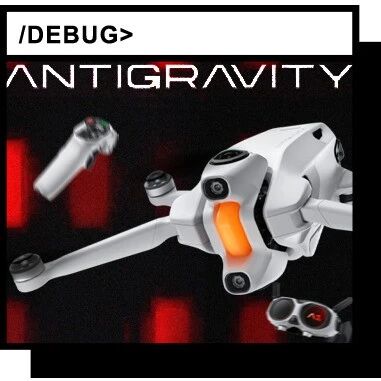
A shift in human-computer interaction is emerging with the introduction of the Yingling A1, a panoramic drone incubated by Insta360. This device aims to redefine the drone flying experience, moving beyond traditional utilitarian applications to offer an immersive, sightseeing-focused approach. The Yingling A1 distinguishes itself as the world's first 8K panoramic drone, integrating a unique control scheme that includes a single-handed controller and head-mounted displays.
Key Points
The Yingling A1 system comprises an aircraft body, a specialized controller, and advanced goggles. Unlike conventional drones that rely on wide-angle lenses and joystick controls, the A1 mandates the use of head-mounted displays, allowing users to navigate by head movements, similar to a fighter pilot. This design positions it distinctly from both FPV (First-Person View) drones and standard aerial photography platforms.
The retail version of the Yingling A1, while visually similar to its engineering prototype, incorporates significant software enhancements. The initial prototype reportedly featured only one-third of the functions present in the mass-produced model, indicating substantial development in its capabilities.
Under the Hood
The core innovation of the Yingling A1 lies in its panoramic camera system. It functions as a flying panoramic camera capable of capturing 360-degree, blind-spot-free 8K video from hundreds of meters in the air.
From a structural standpoint, the drone maintains a lightweight body of 249 grams, which is crucial for regulatory compliance in many regions, often exempting it from flight license requirements. Achieving this weight is notable, considering it integrates not only standard drone components but also a panoramic lens module and an automatic landing gear. For context, a single X5 panoramic camera alone weighs 200 grams, making the A1's total weight management a significant engineering feat.
The one-handed controller supports motion control, enabling users to operate the drone by pointing and shooting, akin to a video game. This contrasts sharply with traditional drones and FPV systems that depend on joysticks and screen-based image transmission. For experienced pilots, an FPV mode is available, allowing control via wrist movements while maintaining a stable view, leveraging the panoramic camera's characteristics to deliver an FPV-like experience with enhanced stability.
The accompanying image transmission goggles are a critical component, featuring 1-inch Micro-OLED screens with a resolution of 2.5K per eye (5K combined) and a 90-degree field of view. These goggles utilize a Pancake optical system, common in high-end VR devices, contributing to their lightweight and comfortable design. They offer both a default anti-dizziness mode and an immersive mode. Beyond real-time flight viewing, the goggles can play back 8K panoramic video and include diopter adjustments for users with varying vision. An external screen on the goggles allows others to share the pilot's view, and ambient light colors can be customized.
Software and Features
The retail version introduces substantial software optimizations. The flight goggles' menu interface has been completely redesigned, offering a clearer, more functional, and animated user experience. Many key functions are now directly accessible from the main interface, with over half of the features being new to this version.
For developers, the integration of C1 and C2 custom buttons on the controller enables advanced maneuvers. Features like Deep Tracking allow the drone to keep a selected target centered in the frame, regardless of drone movement, leveraging the panoramic video capabilities. Smart Shots provide one-click templates for complex maneuvers, simplifying high-difficulty actions for novice pilots. After executing a Smart Shot, the drone automatically saves footage and returns to its starting position.
Trajectory planning on the A1 involves personally flying to desired waypoints and marking them with the C1 and C2 buttons, effectively allowing users to "fly out" a custom route. This feature underscores its "panoramic sightseeing drone" designation.
The Antigravity App simplifies the initial setup and operation, automatically identifying and pairing the drone, controller, and goggles. The app also integrates AI one-click editing, streamlining the post-production process.
Other notable details include a controller designed for blind operation, with large, tactile buttons. During firmware updates, the goggles display scenic views instead of a blank screen, with prompts to check progress on the external screen. The A1 incorporates an obstacle avoidance system for safer flight. In the event of a crash, the lens module is replaceable. A "Care" service is also offered for less experienced users.
A unique load detection feature ensures the drone's intended use for creation and enjoyment, automatically landing if illegal modifications are detected. Meanwhile, a "chuunibyou" (eighth-grade syndrome) feature, the virtual cockpit, adds an AR-like first-person mount effect to the goggles, displaying a 3D animated dragon that responds to head movements. Another whimsical feature is an AR paper airplane that follows the user's direction on screen. The system also includes a throttle Expo option to adjust trigger sensitivity, catering to both beginners and advanced pilots.
Outlook
The Yingling A1 represents a significant departure from conventional drone design and application. Its combination of panoramic imaging, immersive control, and user-friendly software aims to lower the barrier to entry for advanced aerial videography and introduce a new dimension of recreational flying. The emphasis on "sightseeing" rather than purely "task-oriented" flight suggests a potential shift in how consumers interact with drone technology. Looking ahead, the platform anticipates that creative users will push the boundaries of its capabilities, leading to new forms of aerial content.