Microsoft Veteran of 31 Years Confronts Harsh Reality of AI-Era Layoffs

AI Reorganization Ends a Three-Decade Career
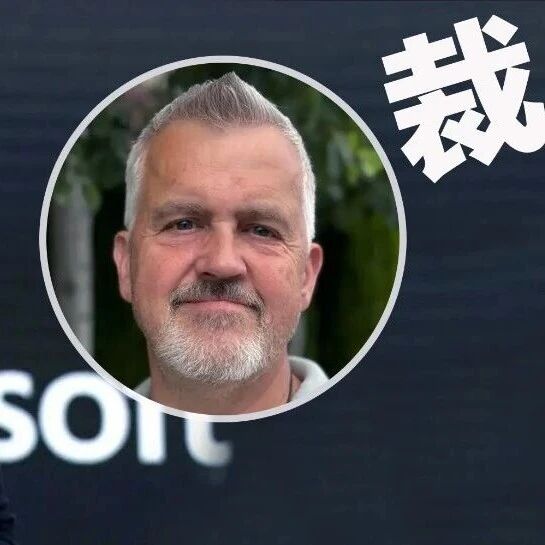
In early 2025, a senior Microsoft manager who had spent 31 years at the company found himself out of a job in a restructuring justified in part by artificial intelligence.
Mike Kostersitz, a senior product manager lead in Microsoft’s Azure division, joined a routine team meeting one day, reviewed progress, and saw nothing out of the ordinary. The next morning, a “high-priority meeting” suddenly appeared on his calendar. It lasted less than 10 minutes.
On the screen, a row of unfamiliar faces delivered a brief, calm message: “Your positions have been eliminated.”
With that single sentence, Kostersitz — who had joined Microsoft in the early days of Windows, later worked across Office and Azure, and helped drive multiple waves of AI transformation — was removed from the system. His own manager, two direct reports and thousands of colleagues exited with him.
The group sat inside one of Microsoft’s recent strategic priorities: cloud computing and AI infrastructure. Only months earlier, the company had announced plans to “optimize organizational structure and compress management layers through AI.” For Kostersitz, the meaning of that language became clear only when his role was cut — the algorithm had, in effect, replaced him.
He said he was not angry. He had spent more than half his life at Microsoft and had even helped AI teams tune their products.
“I was even helping the AI teams tune their products; I didn’t expect that in the end, AI would become the reason to lay me off,” he said.
Microsoft’s stated rationale for the layoffs was to raise efficiency and reduce redundancy. That logic may fit capital and operating metrics. For many of those affected, it felt like a quieter reckoning: seniority, once a proxy for stability, was suddenly less valuable than automation.
As AI systems moved beyond generating code, images and text to orchestrating workflows, generating reports and informing decisions, the people who had written those systems increasingly found themselves on the list of those no longer needed. The technology they had built was now helping determine their own fates.
From Hiring Manager to Candidate in Front of Algorithms
For three decades, Kostersitz rarely needed a résumé. He typically sat on the other side of the table, screening applicants, running interviews and making hiring decisions.
After the layoff, he had to learn how to be a candidate again — and the first lesson was how to get past the machines.
Microsoft assigned career counselors to departing staff. Kostersitz was advised to strip out all work experience from the 1980s and 1990s because AI recruiting systems favor material from the last 10 to 15 years. Two decades of his career were deleted from his résumé so that an algorithm would consider him more relevant.
He likened the process to erasing a portion of his own memory to fit a machine’s preferences.
He also hired a private career coach to help optimize his LinkedIn profile, draft cover letters and refine keywords. Job hunting, he found, had turned into a data-feeding exercise: every line of experience and every verb had to be adjusted to match the weighting of recruitment algorithms.
“Looking for a job now, you’re not interviewing with people first — you’re being interviewed by AI first,” he said.
Kostersitz applied to major tech firms including Google, Apple and Nvidia, and to non-tech employers such as Nike and Nordstrom. Occasionally, the algorithm granted him an interview. More often, he was rejected without explanation.
No one could tell him why; the systems did not provide reasons.
Previously, he oversaw entire hiring pipelines. Now he had to wait for an algorithm to decide whether he could even enter the process.
The tempo had changed as well. Instead of defined hiring seasons, internal referrals and outreach from human resources, he described a constantly shifting “real-time market” in which tens of thousands of candidates competed for the same roles and were ranked continuously.
AI-based recruitment systems can designate applicants as “high potential” or “noise” in seconds. The tools do not consider seniority or personal connections; they compute match scores. For a generation that had relied on accumulated experience, that same experience now often lowered their algorithmic ranking.
“I used to help AI learn how to evaluate people; now AI is helping the company evaluate me,” he said.
Middle Management Targeted as AI Flattens Structures
The recent wave of layoffs in major technology companies, including Microsoft, has often been described in terms of cost cuts, efficiency drives and AI substitution. Kostersitz’s case highlights another pattern: the systematic removal of a whole layer of organizations.
At Microsoft, the recent cuts did not focus on core algorithm engineers or top-level executives. The people most affected were seasoned mid-level staff — those who connected senior leadership and front-line teams, understood the technology and managed the day-to-day business.
As reporting, tracking and some decision-making are increasingly handled by AI, dashboards and automated workflows, companies are compressing the management chain. Roles built on coordination, judgment and experience in the middle tiers are being treated as redundant.
For decades, large firms typically resembled pyramids: front-line workers and junior staff at the bottom, a wide band of managers in the middle, and executives at the top. Companies are now shifting toward what many inside describe as a “barbell-shaped” structure — algorithms and lower-cost execution at one end, strategic design and capital allocation at the other.
Internal headcount patterns at Microsoft from 2010 to 2023 reflect this trend. Operations and R&D roles have expanded sharply, while administrative and marketing positions have grown only marginally. After a hiring peak during the AI build-out, the overall headcount did not collapse, but the internal composition changed substantially.
Across the tech sector, a similar pattern has emerged. Amazon, Meta and Google have all cut significant numbers of mid-level positions over the past two years. One survey cited in this account indicated that in 2024, more than 38% of layoffs in the U.S. tech industry came from management and project coordination roles — a share that exceeded previous downturns.
In the eyes of many large employers, management tasks are increasingly seen as automatable. AI systems can track performance indicators, measure output, generate status reports and even assess team sentiment. Human managers, by contrast, require time and communication and relationship-building.
The result is a harsh logic: AI is not only a tool for managers; in many cases it is a reason to reduce their ranks.
Kostersitz’s skill set remains, but corporate demand for that specific blend of coordination and judgment has diminished. Mid-level judgment, he noted, is being optimized away, much as certain professional photographers saw their work displaced by smartphone cameras or some driving roles are being redefined by autonomous systems.
Adding to the irony, this transformation was often championed by the very people it now affects. For years, mid-level leaders pushed for automation, introduced AI tools, shortened processes and drove efficiency. As efficiency became the overriding metric, the organizational layer they represented started to disappear.
Learning to Speak the Language of Machines
In the months since his departure, Kostersitz has kept up a strict routine. He studies new AI tools, practices interviews and repeatedly records a short self-introduction on camera.
“Hi, I’m Mike, I worked at Microsoft for 31 years.”
He soon found that this line, impressive on its face, could hurt his chances. The length of his tenure often triggered screening out rather than interest. He began to shorten and reframe his experience, align his wording with popular keywords and recalibrate how he presented himself — echoing the way he had once taught machines to parse human language.
He came to see the AI transition less as a direct contest between people and software and more as a shift in who sets the terms. AI systems do not require loyalty, only data and fit. People, in turn, are adjusting to having their prospects scored by algorithms and weighted in models.
Every morning, he scans new job postings. Behind each listing, there may be a human recruiter, or there may be only a screening model. That uncertainty, he has said, makes the process feel more concretely real rather than less.
He sometimes thinks back to the early days at Microsoft, when teams worked to teach AI to recognize “human nature.” Now, he finds himself working to fit the expectations of those systems.
In this account of one career, the AI era is not described as simply replacing people, but as reformatting them. The engineers and managers who helped build and train AI now face a market that needs fewer people whose primary job was “teaching AI” — even as the systems they helped create increasingly shape who gets hired next.