LandSpace's Zhuque-3 Achieves Orbital Insertion, Recovery Attempt Falls Short

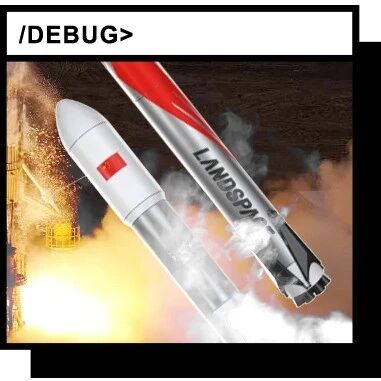
As AI systems move beyond text and into physical domains, the capabilities of advanced robotics and space technology are increasingly scrutinized. In a recent development, LandSpace's Zhuque-3 rocket successfully achieved orbital insertion, marking a significant milestone for China's commercial space sector. However, its intended first-stage recovery did not proceed as planned, with the booster crashing near its launch site.
Key Points
The primary objective of the Zhuque-3 mission was to validate its orbital insertion capability, which it successfully accomplished. This achievement positions the rocket as a viable platform for substantial space missions.
However, the secondary mission—the recovery of the first stage for reusability—was not fully realized. The booster maintained structural integrity during re-entry but failed to execute a soft landing due to an apparent malfunction during the final retro-propulsive phase.
Context
The Zhuque-3 represents a new generation of rockets, diverging from traditional aerospace designs. It utilizes a stainless steel fuselage and liquid oxygen-methane propellants, a configuration akin to SpaceX's Starship. This approach aims to reduce costs and enhance reusability by leveraging the high-temperature resistance of stainless steel and the clean-burning properties of methane.
For developers, this choice of materials and propellants offers potential benefits in terms of manufacturing simplicity and reduced post-flight maintenance.
Under the Hood
The rocket is powered by LandSpace's independently developed Tianque series liquid oxygen-methane engines, generating a liftoff thrust of 750 tons. It is designed to deploy over 18 tons of payload into low-Earth orbit. This capacity is comparable to the operational capabilities of the Falcon 9, indicating its potential for large-scale space operations such as constructing space stations, deploying large satellites, or facilitating deep space exploration.
From a structural standpoint, the Zhuque-3's ability to return intact to the launch pad after atmospheric re-entry suggests the successful validation of its aerodynamic design, grid fin control, and heat-resistant materials. The challenge of the final soft landing is primarily attributed to control algorithms and engine fine-tuning.
Future Direction
The successful orbital insertion means that even without a fully successful recovery, the Zhuque-3 is capable of significant space missions. The adoption of cheaper stainless steel and liquid oxygen-methane propellants is expected to reduce operational costs. If LandSpace successfully masters reusable technology in subsequent stages, it could significantly impact the commercial launch market.
Meanwhile, the increasing demand for satellite launches, particularly for planned constellations like Qianfan and GW, underscores the need for high-capacity, reusable launch vehicles. The Zhuque-3, with its "large capacity + reusability" profile, is positioned to address this demand. Looking ahead, other reusable rockets, such as the Long March 12A, are also anticipated to contribute to China's expanding space capabilities.